Wherein Juke Boy Bonner (March 22, 1932 – June 29, 1978) warns Houstonians of the dangers of the streets, and advises against a visit to Ben Taub General Hospital.
When listening, please keep in mind that he’s playing the guitar, harmonica and drums at the same time. Weldon H. Philip Bonner was a one-man show.
Kidd the Great was born and raised in Houston’s West End, an area that many people errantly consider The Heights these days, along the Washington Avenue corridor. As any Houston area resident can tell you, Washington Avenue was straight ghetto as recent as ten years ago, before gentrification took a foothold and created the Washington Strip Houston we now know, full of condos and upscale bars.
I met Kidd The Great about two years ago by catching a ride in his taxi. This vehicle is unforgettable. It has a custom Bentley grill installed, chrome all around, 24 inch custom wheels, a Playstation 3, and custom surround sound with a 15 inch subwoofer in the trunk.
While riding in Kidd’s “Ghetto Fab Cab”, as he calls it, you can play video games, sing karaoke, or surf the web on his Wi-fi connection. If you’ve never seen a taxi with a tv monitor in it, this one has seven.
“I’m not just a cab driver. I provide a service to the community.” Kidd explains. “If someone is looking for a product or service, I’ll find it for you. That’s what I do.”
The Ghetto Fab Cab is not a novelty. It is the key to Kidd’s success, because he’s hasn’t put thousands of dollars into this vehicle to increase cab fare or get more customers. He’s doing it to promote his new album, “How I Be Liking My Mic”, and it’s working.
I was so impressed with Kidd’s skills when first hearing his tracks, I asked him for an interview over lunch, which turned out to be an all-day experience in the front seat of the Ghetto Fab Cab.
Kidd sold crack cocaine in his youth to get by, but doesn’t elaborate much on the subject. He’s 35 now, so you can guess that he was probably slinging rocks around the same time UGK’s “Hard to Swallow” dropped in 1992, which is pretty much an instructional guide on the masterful subject of slinging rocks. Those days are long behind him, but the experience was integral to his music.
Kidd has been rhyming as long as he can remember. He got his first start when his cousin and fellow rap artist J auRa introduced him to (now defunct) local label Unified Records. He joined Texas Ballers, a Southern rap team that enjoyed limited local success, with an album that was later chopped and screwed by Swishahouse. In the meantime, 2Tone, founder and producer of Texas Ballers, was in the process of discovering a young Hollywood Floss– Kidd’s best friend from childhood, who was raised with him as if they were brothers.
Kidd explains, “Hollywood’s a real producer. He saw what we were doing, wanted in, and jumped right in and ran with it. He’s a natural- you’ll hear his stuff on ESPN, read about him in XXL magazine. If you want one of his albums, you can get it at Best Buy. He produced my new album and built most of these tracks you’re hearing.”
Kidd lists his influences as James Brown, George Clinton, Cappadonna, K-Rino, Elton John, Radiohead, Kurt Cobain, D’Angelo, Wu-Tang, Isley Brothers, and everything Johnny Cash has ever done.
“If you want to get into music, take it home with you and sleep with it. She’s your girl, and you’ve gotta wake up with her. If you neglect her, she’ll take off and find somebody else. ”
To hear more of Kidd The Great’s music, you can check out his website or pick up his album on iTunes.
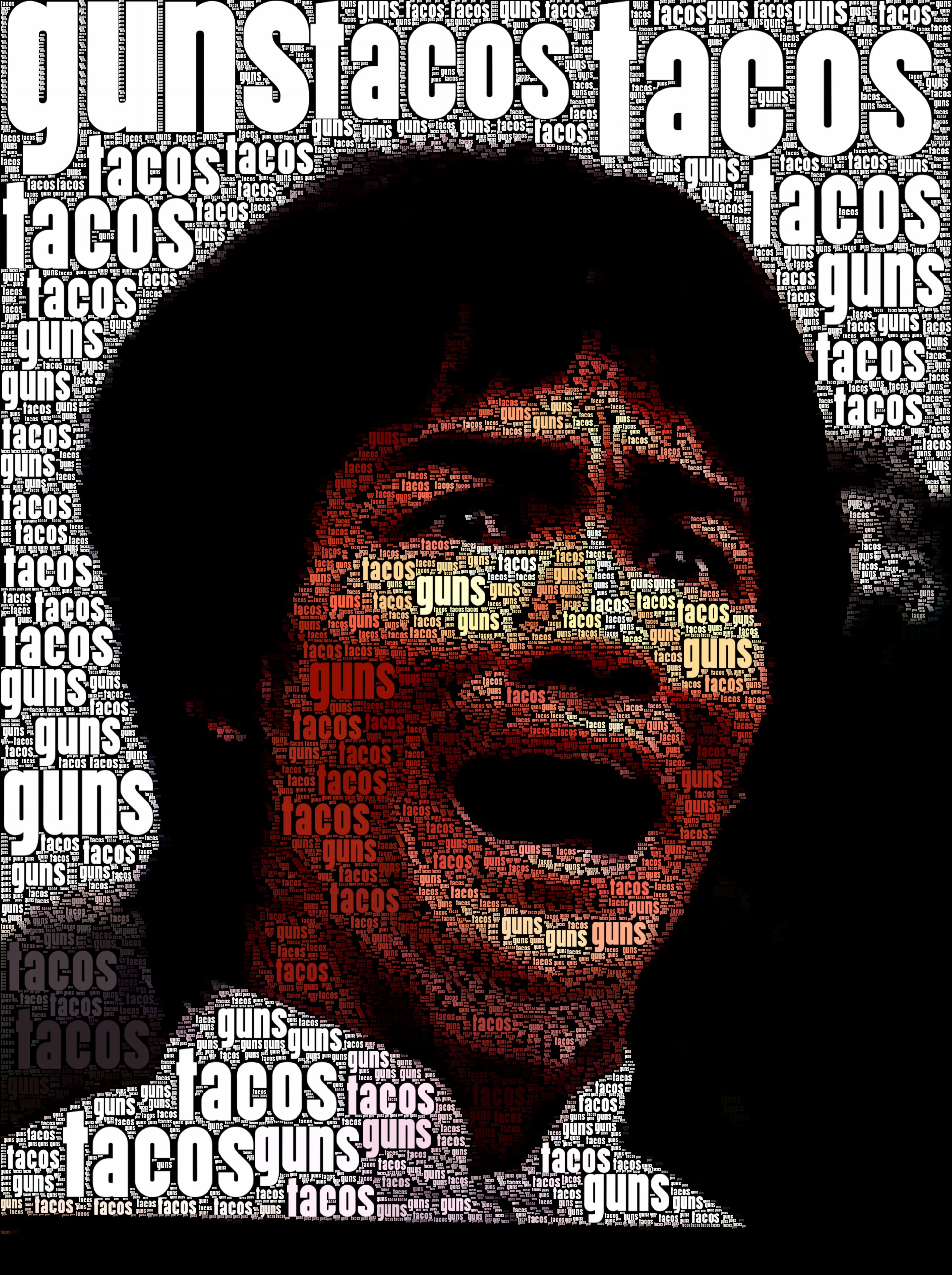
Found a neat little app on my phone (WordFoto) that changes images to text. I chose an image of Rosalino “Chalino” Sánchez packing a Colt 45. Seriously, this took about 30 seconds to do.
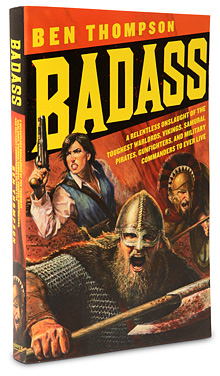
An interview with Ben Thompson: Badass of the Week
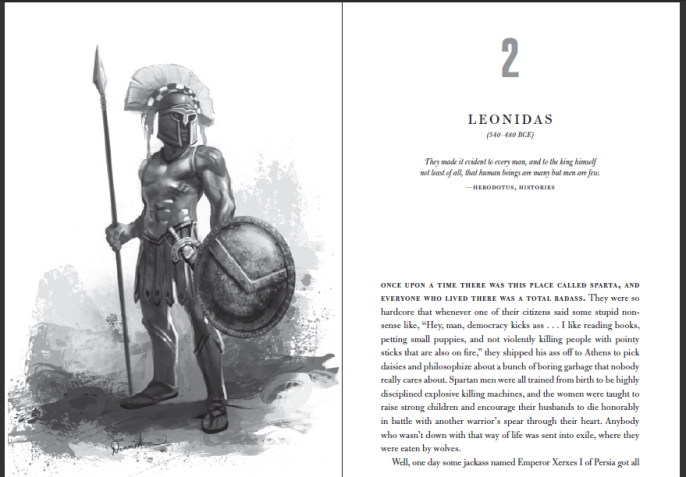
Maybe you’ve heard of Badass of the Week, maybe you haven’t. Either way, there’s this guy Ben Thompson that blogs about the baddest badasses in history, in a style that will make you laugh so hard you will drop kick a litter of newborn puppies just to get the grin off your face. The list is very diverse, and includes all types of historical characters, good and evil alike, from Harriet Tubman to The Predator.
I had the opportunity to ask Ben a few questions, and he was nice enough to get back to me instead of sending ninja assassins to my house.
G&T: You’ve listed people dead and alive, male and female, ancient kings, pro wrestlers and General Zod from Superman II. Are there any minimum requirements for becoming a Badass of the Week?
BT: There are a lot of different types of badasses out there, but the main thing that unites a mad scientist badass like Nikola Tesla with an over-the-top face-wrecking badass like Leonidas is that neither of those guys put up with anyone else’s crap. It doesn’t matter what you’re really trying to accomplish — world conquest, nuclear fission, jumping a motorcycle over the Grand Canyon, etc. — as long as you go totally balls-out after it and don’t let anything get in your way, that’s badass.
G&T: I once watched a Kung Fu movie where this guy would punch three holes in the forehead of his enemies with his fingertips. I think he lived in a cave full of ventilated human skulls. Is there any truth to this?
BT: There was a Japanese-Korean dude named Mas Oyama who spent most of his life living on a mountain hardening his fists by punching trees into firewood. He would occasionally come down into town to kick the crap out of martial arts experts and kill bulls by punching them in the face. If this guy can do that, I don’t see why someone wouldn’t be able to punch his fingers through your skull and use it as a bowling ball.
G&T: What is the true “Breakfast of Champions”?
BT: Wheaties, dusted with metal shavings taken from a decommissioned Soviet intercontinental ballistic missile and sprinkled with two scoops of 9mm ammunition.
G&T: Has a featured Badass,or the family of a featured Badass, ever asked you to take down or correct an entry on your site?
BT: I once wrote a story about a 70 year-old man named Gene Moe, who killed a Grizzly with his bare hands while it was mauling him to death. Moe then crawled two miles to the car, drove himself to the hospital, and survived. He emailed me to tell me that he didn’t like my take on his story — the real reason he’d won the fight was because God guided his fist into the bear’s skull, and since I didn’t talk about Jesus coming down and helping this guy kick the crap out of a rampaging Grizzly my story was inaccurate (he much preferred the 700 Club version, naturally). I figured hey, this guy fistfought a bear and won, so I probably shouldn’t give him a hard time if he wants me to take my version of his story off my website.
G&T: Lee Marvin or Steve McQueen? Why?
BT: Can’t we have both?
G&T: How many swords do you own?
BT: I’ve got a set of samurai swords (the katana and wakizashi), an English longsword, a Confederate cavalry saber, and a letter-opener designed to look like Glamdring the Foe-Hammer.
G&T: Are there any authors that have influenced your writing style? I noticed you use a lot of long sentences and commas like you are Homer or something.
BT: Homer was epic poetry, though, and my rhyming and meter skills are really sub-par. As far as history goes, I always loved Gibbon and Plutarch, because those guys told the true stories, but they didn’t have a problem telling you if they thought someone in particular was awesome or a total douchebag. There was none of this middle-of-the-road, fake-objectivity crap. If the guy sucked balls, they came right out and said it rather than trying to rationalize for him.
For more modern authors, I’m a huge fan of Will Cuppy’s “Decline and Fall of Practically Everybody”, as well as a book called “1066 And All That”. I also love Douglas Adams, who was, of course, a genius, but not related to history in any appreciable way.
G&T: I understand if you hate this question, but I have to ask. Who is your favorite Badass?
BT: It’s impossible to pick a favorite, but when people talk to me about the whole Badass of the Week thing, the guy I like to point to is a guy named Wolf the Quarrelsome. Wolf was an Irish barbarian who fought the Vikings, defeated them in combat, and then killed their leader by cutting the guy’s torso open with an axe, tying one end of his intestines to a tree, and then making the guy walk around the tree until he was dead.
Wolf only appears in like three lines in all of history, and he contributes very little to human history in any significant way, but this is a badass story, and it’s the sort of thing I love reading about. Badass of the Week was designed to tell stories like that.
G&T: I have always wanted to cut down a giant redwood tree with a giant chainsaw. Is this natural?
BT: I think the uncontrollable urge to cut things apart with a chainsaw is something that’s deeply embedded into human DNA. Anyone who claims otherwise is only denying their true nature.
If you’re not familiar with Chingo Bling, this is probably your first time to this site, and you are adept at sewing images of dolphins onto sweaters and hanging out at craft shops. You pay good money for cable television, and you choose to watch Housewives of Orange County on purpose. You pay your taxes well ahead of the deadline. You’d like to visit Cozumel sometime, but you’re afraid of Mexican cartels that will throw you in jail and call your relatives and charge them for a $300 toothbrush because you saw that on 60 Minutes in 1995. Put down your BeDazzler.
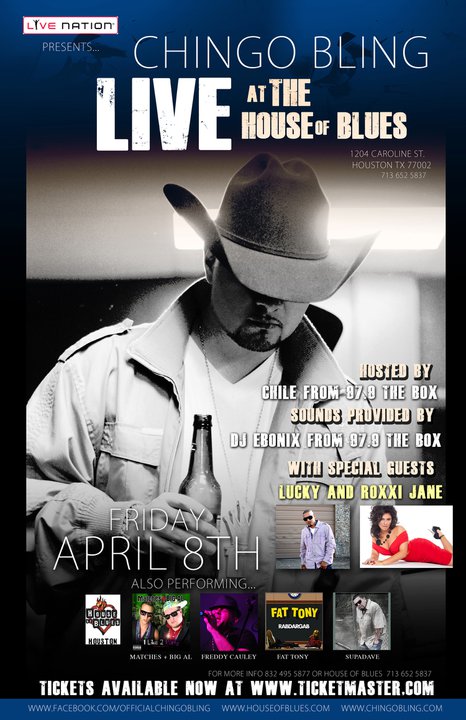
Chances are, you are very much aware of Chingo Bling. Lucky for you, you can simply buy your tickets for his April 8 show at the House of Blues– you don’t have to stalk him like I did a while back. Since his appearance at the Houston Chowhound’s Taco Truck Crawl, he’s taken on a new batch of foodie fans in this town, who will likely be attending the show. Here are a few helpful tips.
1. Don’t try too hard.
Sure, you’ve got an XXL airbrushed Selena shirt in the back of your closet. We all do. Leave it in the closet. Just be yourself, unless you are a shirt-tucker.
2. You don’t have to know all the words.
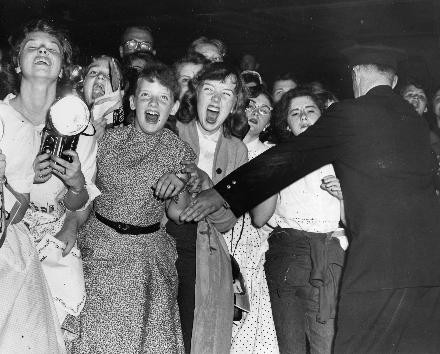
Don’t be the starry-eyed black and white teenybopper in the front row mouthing all the lyrics like it’s your first Elvis concert. You will not impress Chingo Bling, Roxxi Jane, or Lucky Luciano.
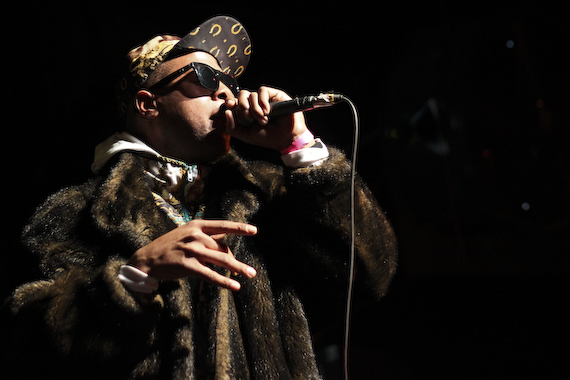
Fat Tony. Photo by Marco Torres
3. Get there early.
Other than the obvious big acts, there are several openers. One of these is Fat Tony, who puts on an explosive live show. He blew up Free Press Summerfest last year, as well as opening for Wu-Tang in their rare Houston appearance at Numbers. Don’t be fashionably late to this one, or you’ll miss out.
4. Save a few bucks.
You can end up paying around $20 for parking around the House of Blues if you don’t know your way around. Catch a bus, ride a bike, or call Washington Wave unless you’ve got a good idea how parking works in the area. There’s not much of a beer selection, and the drinks are pricey. My solution? Get tanked before you go, or smuggle in your booze like a real vaquero.
I’ve been a huge fan of McSweeney’s Books for years, and they promote these Wholphin DVD’s on their site. These are collections of movie shorts from around the world, some of them extremely odd (or awful), and some extremely amazing. I picked up a few, and one of the short films blew my mind. It’s called “Walleyball”, and it shows US folks playing volleyball over the border fence with Mexican folks. I remember this fence very well- when living in Tijuana, we would frequently head to this beach. Young boys would bring coolers of Cerveza Sol and Dos Equis around and sell them for a buck or two (though no glass containers were allowed on the US side.) Try to ignore the annoying narrator, and enjoy the ironic beauty of a simple volleyball game among unlikely friends. (Music by Aesop Rock.)